Brevard Judo Academy
Why Judo Students Learn to Fall First
Published by David J. Ellis
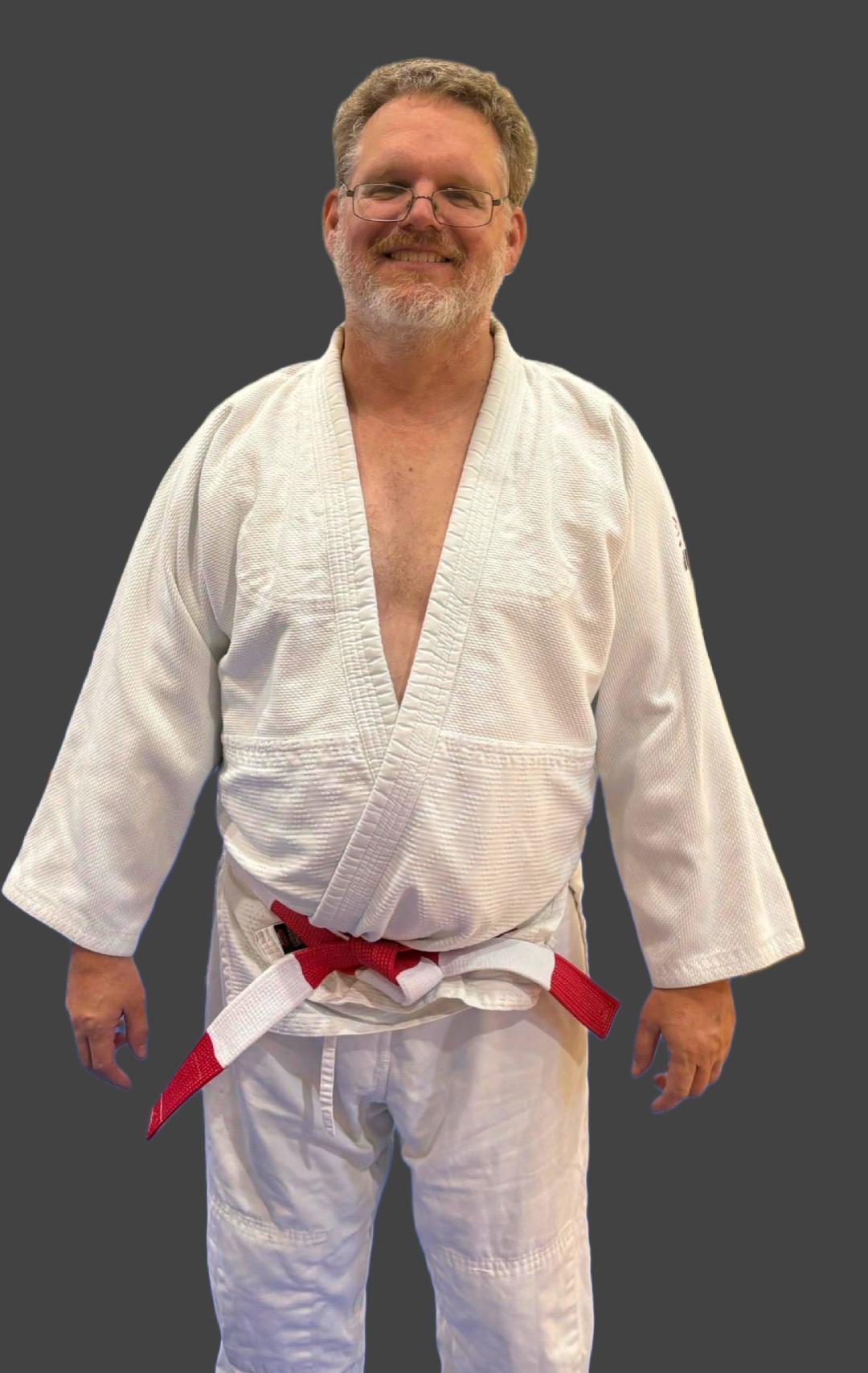
Chief Instructor
Brevard Judo Academy
One of the first things every new student learns at Brevard Judo Academy isn't throwing—it's falling safely. Discover why ukemi, the art of breakfalls, is one of the most valuable life skills taught in judo.
At Brevard Judo Academy, every adult beginner starts by learning how to fall safely before learning their first throw. Most people expect to be thrown right away. Instead, they learn how to fall.
To someone standing on the sidelines, that may seem backwards. Why learn to hit the ground before learning how to throw someone?
The answer is simple: because learning how to fall safely is one of the most valuable skills you’ll ever learn—not just in judo, but in everyday life.
Falling Is Part of Life
Everyone falls.
Children fall while playing. Adults fall too. Adults slip on wet floors, trip over uneven sidewalks, lose their balance climbing stairs, or fall from ladders while working around the house.
Unfortunately, most people have never been taught what to do when they fall. Their natural reaction is often the wrong one. They reach straight out with their hands, stiffen their body, or twist awkwardly. Those reactions can lead to broken wrists, shoulder injuries, or head injuries.
At Brevard Judo Academy, we believe learning how to protect yourself is just as important as learning how to throw someone. That’s why every new student begins with the fundamentals.
The First Lesson in Judo
Before students learn their first throw, they learn ukemi, the Japanese word for breakfalls.
Ukemi teaches students how to:
- Protect the head from striking the ground.
- Spread the force of impact across the body.
- Avoid reaching out with a straight arm.
- Relax instead of tensing during a fall.
- Return safely to their feet.
These skills are practiced over and over until they become natural.
At Brevard Judo Academy, we introduce breakfalls progressively. Students begin close to the mat and build confidence step by step before moving on to more advanced techniques. There is no rush. Every student progresses at their own pace, and safety always comes before speed. Learning to fall correctly creates a solid foundation for everything that comes later.
When Judo Training Matters Most
People sometimes ask whether learning breakfalls is really useful outside the dojo.
For me, the answer is an easy yes.
Knowing how to fall has saved me several times throughout my life.
One incident stands out more than any other.
I was working on a ladder when I suddenly lost my balance. Before I knew it, I was falling onto a concrete surface below.
There wasn’t time to think about what to do.
"My body simply reacted the way it had been trained through years of practicing ukemi."
Instead of panicking or reaching out with a stiff arm, I fell the way I had practiced thousands of times on the mat.
Walking away from that fall reinforced something I had believed for years: learning how to fall is not just a judo skill—it is a life skill.
That wasn't the only time ukemi has helped me. Over the years, knowing how to fall has protected me on several occasions, both on and off the mat. Every experience has reinforced my belief that breakfalls are one of the most valuable skills anyone can learn. It’s also one of the reasons I make sure every beginner at Brevard Judo Academy learns ukemi before focusing on throws.
More Than a Warm-Up
Some people think practicing breakfalls is simply part of warming up before class.
Experienced judoka know better.
Ukemi is a skill that continues to improve throughout your judo journey. Even advanced black belts practice breakfalls regularly because they understand that the ability to fall safely is never something you outgrow.
At Brevard Judo Academy, beginners and black belts practice ukemi together. No one is ever "too experienced" to work on the fundamentals because the fundamentals are what keep us safe.
Building Confidence
Learning how to fall also changes the way beginners approach training.
Many new students are nervous about being thrown. Once they realize they know how to land safely, much of that fear disappears.
That confidence allows students to relax, learn faster, and enjoy training.
Ironically, learning how to fall often helps students become better at throwing because they stop worrying about the landing.
Watching a new student gain confidence after mastering their first breakfall is one of the most rewarding parts of teaching at Brevard Judo Academy.
A Skill for Life
One of Jigoro Kano’s goals when he created judo was to develop skills that would benefit people throughout their lives.
Ukemi is a perfect example.
While not everyone will compete in a judo tournament, everyone can benefit from knowing how to protect themselves during an unexpected fall.
The value of learning to fall doesn’t end when class is over. It stays with you every day, whether you’re walking across a wet parking lot, climbing a ladder at home, or simply losing your footing.
More Than Just Hitting the Ground
When people hear the word "fall," they usually think of failure.
In judo, falling means something entirely different.
In judo, falling means learning, getting back up, and becoming a little more confident each time you practice.
I’ve experienced firsthand how valuable that training can be. Knowing how to fall has saved me more than once—including falling from a ladder onto concrete—and it’s one of the many reasons I believe every beginner should learn ukemi before anything else.
At Brevard Judo Academy, our goal isn’t simply to teach people how to throw. We teach adults how to move safely, train with confidence, and develop skills they can use for the rest of their lives.
If you’ve never tried judo before, your first class may not begin with a big throw. It may begin with something much more important—the ability to fall safely, get back up, and keep moving forward.
Whether your goal is fitness, learning traditional Kodokan Judo, building confidence, or simply trying something new, we welcome beginners of all experience levels.
Come experience judo for yourself at Brevard Judo Academy. If you've been thinking about trying judo but aren't sure where to start, we'd love to meet you. Your first class at Brevard Judo Academy begins with learning to move safely, build confidence, and enjoy the journey. Contact us today to schedule your free trial class.
Brevard Judo Academy
Discipline • Respect • Strength
About the Author
David J. Ellis is the Chief Instructor of Brevard Judo Academy in Melbourne, Florida. A 6th Degree Black Belt with more than 50 years of judo experience, he has taught students of all ages and believes that learning to fall safely is one of the most valuable life skills judo provides.